Advances in behavior prediction techniques for intelligent systems

Prospection, which refers to the process of thinking about the future, represents a critical ability that underlies the reasoning process of intelligent systems.
In particular, prospection allows these systems to predict the future behavior of subjects in an environment (i.e., behavior prediction task) and reason about possible outcomes accurately.
In his PhD thesis, sought to enhance the prospection ability of intelligent systems by addressing the behavior prediction task through several detailed research objectives. This endeavor aligned with the growing interest in the cognitive development of intelligent systems, setting the stage for a deeper exploration of the recent advances and persistent challenges in this domain.
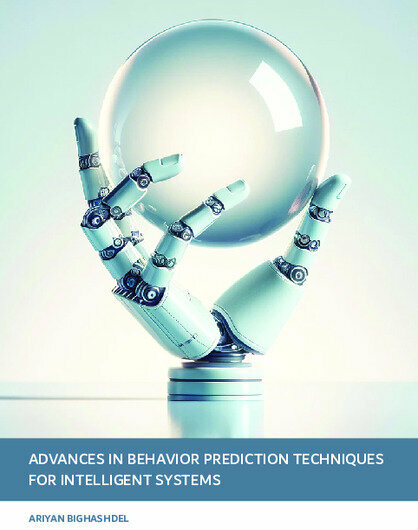
Cognitive abilities of intelligent systems
In recent years, there has been an upsurge in interest for advancing the cognitive abilities of intelligent systems, particularly with a focus on enhancing prospection capabilities. Notably, contemporary developments in deep learning have contributed significantly to improving the prospection ability of intelligent systems and enabling them to perform the behavior prediction task.
However, the complexity of the behavior prediction task presents several challenges that continue to be active areas of research in deep learning. These challenges include: (1) strong correlations between the behaviors of the subject and other entities in the environment, resulting from the subject's interactions; (2) multiple and potentially different intentions underlying the subject's behaviors, leading to multi-intention behaviors; and (3) continual learning of the subject's behavior, wherein previously learned prediction skills can be lost when learning new ones (i.e. catastrophic forgetting). These challenges form three distinct research themes that are addressed separately in different parts of the thesis of Bighashdel.
In summary, Bighasdel鈥檚 research makes significant contributions both at the application level, specifically in pedestrian behavior prediction, as well as at the fundamental level, which can be applied across a wide range of behavior prediction tasks.
The novel approaches presented in this work, along with their promising results, are expected to provide substantial improvements in addressing the challenging task of behavior prediction and enhancing the prospection capabilities of intelligent systems.
Title of PhD thesis: . Supervisors: Gijs Dubbelman and Peter de With.