Perinatal Medicine
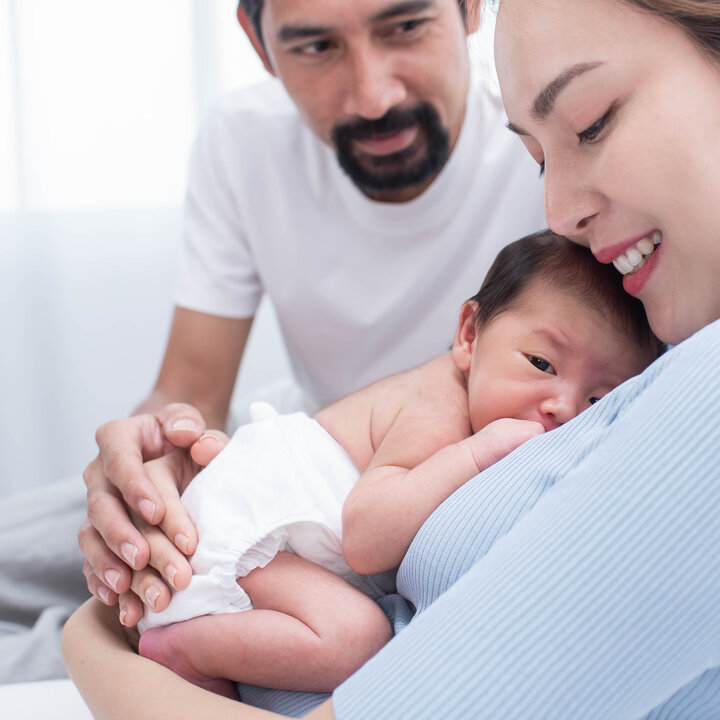
鈥淔amily-centered care innovations for the first 1000 days of life鈥�
The first 1000 days of life start with conception and are followed by the prenatal(pregnancy), delivery (child-birth), and neonatal (newborn) phases. All phases are very different in nature and yield important needs and opportunities for technology-based innovation. In the unique collaboration between hospital, university and industry, e/MTIC focuses on non-invasive monitoring techniques and on educational simulators. These focal points are intertwined via common work on physiological models. They match naturally to the available expertise of the partners and to several important wheels that are already in motion. Last but not least, they foreshadow an important innovation potential, scientifically, clinically, and commercially. All projects contribute to our family-centered care innovation vision.
Our themes:
o Pregnancy monitoring:
Pregnancy and delivery are risky phases in the life of mother and child. Key health risks include premature delivery and poor placenta function, which are both potentially lethal to the fetus or can lead to life-long disabilities. Current monitoring techniques leave much to be desired: they frequently fail to detect critical risks yet also lead to many unnecesary interventions. Moreover they are only sparsely available (20-week echo, antenatal visits, delivery) so that risks that develop in between are likely to go undetected. Our aim is to a) strongly improve the dependability of pregnancy monitoring (especially Doppler ultrasound), and b) to make a step towards continuous monitoring (by analyzing electrical signals recording on the maternal abdomen).
o Neonatal monitoring & simulation:
The Neonatal Monitoring & Simulation program line develops new techniques for safe and quiet care of the newborn, facilitating family-centered care and mother-child bonding, in order to improve patient outcome. We focus on the development of new parameters and on unobtrusive measurement ways of these parameters. Moreover, we investigate techniques for predictive monitoring using big data. To investigate the effects of clinical interventions on neonatal outcome, we develop simulation (mathematical and physical) models. The models are primarily used for the formulation of hypotheses, that are then tested in a clinical setting.
o Family health:
In the Parents & Kids program line we investigate the perinatal period. Being pregnant, delivery and neonatal care are not separate events, they are part of continuum of professional-care and self-care that starts with the desire to have a child to bringing the child up, and supporting the best development possible. We aim for a holistic solution, where services are accessible and relevant for professionals, parents, the child and his family in different contexts and time. We investigate and design product-service systems, and address the complexity, growth and openness of these systems. Special attention is paid to ensure meaningful experiences in this domain for the different end-users.
鈥淔amily-centered care innovations for the first 1000 days of life鈥�
The first 1000 days of life start with conception and are followed by the prenatal(pregnancy), delivery (child-birth), and neonatal (newborn) phases. All phases are very different in nature and yield important needs and opportunities for technology-based innovation. In the unique collaboration between hospital, university and industry, e/MTIC focuses on non-invasive monitoring techniques and on educational simulators. These focal points are intertwined via common work on physiological models. They match naturally to the available expertise of the partners and to several important wheels that are already in motion. Last but not least, they foreshadow an important innovation potential, scientifically, clinically, and commercially. All projects contribute to our family-centered care innovation vision.
Our themes:
o Pregnancy monitoring:
Pregnancy and delivery are risky phases in the life of mother and child. Key health risks include premature delivery and poor placenta function, which are both potentially lethal to the fetus or can lead to life-long disabilities. Current monitoring techniques leave much to be desired: they frequently fail to detect critical risks yet also lead to many unnecesary interventions. Moreover they are only sparsely available (20-week echo, antenatal visits, delivery) so that risks that develop in between are likely to go undetected. Our aim is to a) strongly improve the dependability of pregnancy monitoring (especially Doppler ultrasound), and b) to make a step towards continuous monitoring (by analyzing electrical signals recording on the maternal abdomen).
o Neonatal monitoring & simulation:
The Neonatal Monitoring & Simulation program line develops new techniques for safe and quiet care of the newborn, facilitating family-centered care and mother-child bonding, in order to improve patient outcome. We focus on the development of new parameters and on unobtrusive measurement ways of these parameters. Moreover, we investigate techniques for predictive monitoring using big data. To investigate the effects of clinical interventions on neonatal outcome, we develop simulation (mathematical and physical) models. The models are primarily used for the formulation of hypotheses, that are then tested in a clinical setting.
o Family health:
In the Parents & Kids program line we investigate the perinatal period. Being pregnant, delivery and neonatal care are not separate events, they are part of continuum of professional-care and self-care that starts with the desire to have a child to bringing the child up, and supporting the best development possible. We aim for a holistic solution, where services are accessible and relevant for professionals, parents, the child and his family in different contexts and time. We investigate and design product-service systems, and address the complexity, growth and openness of these systems. Special attention is paid to ensure meaningful experiences in this domain for the different end-users.
Our PhDs, EngDs and PDs
| EngD | Giulia Acquaviva | New remote non-invasive monitoring solutions for ensuring the health of mothers and babies before and after birth |
| EngD | Ysanne Pasveer | Valorisation and pre-clinical evaluation of pls |
| PD | Alessandra Galli | Models of the maternal and fetal cardiovascular systems coupling via uterus and placenta |
| PD | Amir Gholampour | New remote non-invasive monitoring solutions for ensuring the health of mothers and babies before and after birth |
| PD | Annemarie Fransen | Save mothers by reducing postnatal hemorrhage |
| PD | Gabriele Varisco | Fetal movement for fetal wellbeing detection |
| PD | Giulio Steyde | Monitoring cardiovascular maternal-fetal coupling for improving perinatal and pregnancy outcome |
| PD | Xufei Chen | Ai for high-quality fetal ultrasound imaging with application to detection of congenital heart disease |
| PD | Yizhou Huang | New remote non-invasive monitoring solutions for ensuring the health of mothers and babies before and after birth |
| PD | Zheng Peng | Healthy ageing starts with a healthy start |
| PhD | Beatrice Federici | New remote non-invasive monitoring solutions for ensuring the health of mothers and babies before and after birth |
| PhD | Chenyan Huang | Maternity dashboard |
| PhD | Giulia Palladino | Healthy ageing starts with a healthy start |
| PhD | Guilherme Reis | Monitoring cardiovascular maternal-fetal coupling for improving perinatal and pregnancy outcome |
| PhD | Ilse van de Ven | Healthy ageing starts with a healthy start |
| PhD | Irene Lensen | Monitoring cardiovascular maternal-fetal coupling for improving perinatal and pregnancy outcome |
| PhD | Ivar de Vries | Preclinical feasibility of advanced electrophysiological monitoring for early prediction and detection of perinatal complications |
| PhD | Maria Jos茅 Almario Escorcia | New remote non-invasive monitoring solutions for ensuring the health of mothers and babies before and after birth |
| PhD | Milad Mazaheri | Save mothers by reducing postnatal hemorrhage |
| PhD | Nadine de Klerk | Continuous electrophysiological ctg monitoring at the obstetric high care: a randomised controlled trial |
| PhD | Pascalle Wijntjes | Risk stratification in early pregnancy |
| PhD | Phebe Berben | Implementation of intrapartum non-invasive electrophysiological monitoring at the labour ward: a randomised controlled trial |
| PhD | Sofie van Weelden | Ctg (thuis)monitoring |
| PhD | Sophie Dassen | Ai for high-quality fetal ultrasound imaging with application to detection of congenital heart disease |
| PhD | Sue Yoon | Improving care of vulnerable women by early risk identification during pregnancy |
| PhD | Swedha Sankaranarayanan | Healthy ageing starts with a healthy start |
| PhD | Yanqi Wu | Unobtrusive pregnancy sleep and fetal monitoring for early risk prediction (in short, pregnancy sleep for early risk prediction) |
| PhD | Yijing Zhang | Enabling widespread ambulatory monitoring for improved pregnancy outcome |